Get the latest news
Subscribe to receive updates from the School of Data Science.
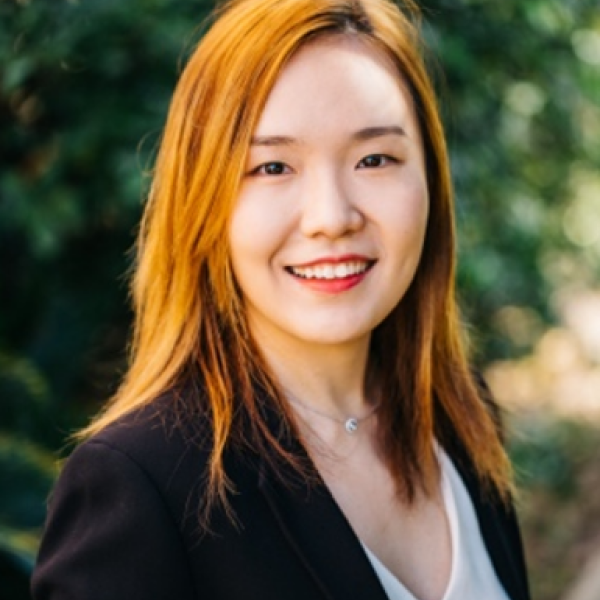
My academic training includes a Ph.D. in Industrial Engineering from the University of Tennessee, an M.S. from Florida State University, and a B.S. in Physics from Southeast University in China. Since joining UVA, I have led multiple interdisciplinary projects that synergize data-driven and mechanistic modeling approaches. These include funded efforts in detecting venous thrombosis from cardiac MRI Cine, estimating glycemic variability using self-monitoring of blood glucose, predicting melanoma metastasis from spatial microenvironment.
My research centers on the design of innovative machine learning models that adapt to application- and problem-specific scenarios. My group focuses on developing AI methods that can learn from diverse data characteristics, uncover meaningful patterns in unobserved systems, integrate domain knowledge to improve predictive performance, and advance computer vision– based generation tasks. These methods are motivated by real-world challenges in healthcare and engineering, where AI can lead to new insights, improved diagnostics, and accelerated discovery. My research field includes:
Another research focus is the development of AI-driven methods to infer cardiac electrical dynamics from noninvasive body sensor readings. The coupled body–heart system presents complex and irregular 3D geometries, where traditional statistical regularization methods are highly susceptible to noise. To address this, we aim to create a robust in-context, physicsaware learning framework capable of reconstructing heart dynamics from noisy body observations across diverse disease mechanisms. By integrating datadriven learning with physics-based principles, our goal is to build generalizable models that enhance precision cardiac diagnostics and enable broader applications in healthcare and engineering.
Subscribe to receive updates from the School of Data Science.