Image

When Zilu “Trevor” Xu started his research project as an undergraduate student at the University of Virginia School of Data Science, he knew that he wanted to apply his technical skills to help solve real-world problems. What he didn’t know was how the research opportunity would change the way he views data science and shift his entire perspective around inequality.
Xu and other data science students at UVA are experiencing research first-hand, thanks to an investment in undergraduate research from Deloitte, a global professional services firm and School of Data Science capstone sponsor. “Studies show that research experiences improve student self-efficacy, science identity, and confidence,” said Claudia Scholz, director for research development at the School of Data Science.
Below are stories from three undergraduate students at the School of Data Science who dove into research and came out the other side seeing data, and the world, differently.

Education
B.S. in Data Science, Class of 2027
Faculty mentor
Jess Reia, Assistant Professor of Data Science
Project
Building Bridges and Re-imagining Responses to Fight Anti-Trans Polarization
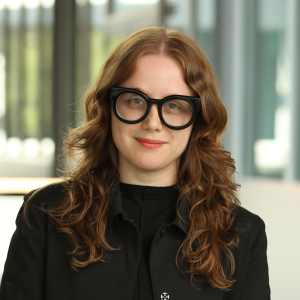
Currently I am working with Assistant Professor Jess Reia on a project supported by the Carnegie Corporation of New York, that uses the 2015 U.S. Transgender Survey to study why transgender adults avoid seeking medical care. We're looking at how factors like insurance barriers, negative experiences with healthcare providers, family support, and state-level policy climate interact to predict healthcare avoidance.
We're also using machine learning methods like XGBoost and SHAP analysis to go beyond traditional statistical models, not just predicting who is most likely to avoid care, but also understanding which specific factors, and which combinations of factors, are driving that risk for different subgroups of the transgender population.

On the technical side, I got into machine learning interpretability methods and working with survey data. But honestly the bigger learning curve was everything around the research process itself, from finding the specific topic from the previous study, to learning how to apply for restricted datasets, writing a data management plan, evaluating data sources, and thinking carefully about research design. It gave me a much more complete picture of what research actually looks like outside of a classroom.

My mentor is Jess Reia, an assistant professor of data science and public policy at UVA's School of Data Science. They bring both technical depth as a data scientist and a rigorous but flexible methodological perspective as a public policy researcher, which has shaped how I think about the project as a whole. We meet online every few weeks. Professor Reia provides lots of insightful ideas and points me in a clear direction, but also gives me flexible space to figure things out on my own, like choosing specific analysis methods or models. This balance has pushed me to be a lot more independent than I expected, and it's been a good way to learn how to navigate ambiguity, something you don't really get from structured assignments.
As a future data scientist, I want to apply my technical skills to global sustainability and public policy to help solve real-world problems. This research experience has given me a new way of thinking about what data science actually means. Working with sensitive datasets like the USTS made me realize that data isn't just numbers, it represents the lives of real people. The disparities and biases we find in the data reflect actual inequalities happening in our communities. That shift in perspective has been one of the most valuable things I've taken from this project, and it's reshaped how I think about the responsibility that comes with doing data science work.
The funding gave me the opportunity to be involved in a real research project as a third-year undergraduate, which is something I wouldn't have access to otherwise. It's very different from coursework, I'm dealing with things like restricted data access processes, data management planning, and research decisions that have real implications for how the work gets done. What's been most meaningful is that the things we're working on actually matter to real communities, and that sense of purpose is hard to replicate in a classroom setting. Without this kind of support, it would be hard to get hands-on experience at this level this early in my academic career.

Education
B.S. in Data Science, Class of 2027
Faculty mentor
YY Ahn, Quantitative Foundation Distinguished Professor of Data Science
Project
BetterStreets – Investigating and influencing how streets can be safer for cyclists and pedestrians
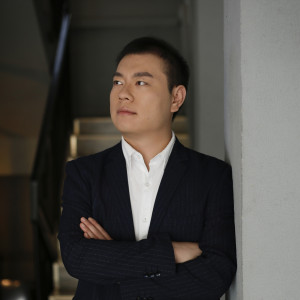
Deloitte funding has brought our project to life. An idea can only go so far without resources to back it, so I am grateful for their contribution. As an undergraduate student with no prior data science research experience, I have loved gaining the experience of building a meaningful project from the ground up. This wouldn't have been possible without their support.
The project I am working on is called BetterStreets. The motivation for this project comes from a desire to investigate and influence how we can make our streets better for walking and biking. The core idea is to validate whether vision-language models can reliably approximate human perceptual judgments of street environments. Once validated, the idea is to use them at scale to quantify how specific street elements influence perceived walkability and bikeability through semantic axis discovery.
Ultimately, our goal is to use these discovered axes to generate images that simulate what a more walkable or bikeable street could look like. We want to build a visual representation of design improvements grounded in how people actually perceive urban spaces.
I have learned an incredible amount, both about the topic and also about the research process in general. The process of building an evaluation pipeline from the ground up, from collecting data to validating results, has taught me how much careful methodology goes into producing even a single finding. I have learned how difficult, yet important it is to balance the desire to dive deep into a specific problem with staying grounded in your overarching research questions. It is easy to get lost worrying about the small details, but this experience has shown me the importance of setting clear goals and frequently stepping back to ensure I am moving in the right direction.
My mentor and advisor for this project is YY Ahn. He has been immensely helpful in guiding me throughout the process and offering advice that has shaped the direction of the project. Whether we are meeting to review results or troubleshoot a new challenge I have come across, Professor Ahn has a way of helping me zoom out and stay connected to the bigger picture when I get too focused on the details. I have loved being able to brainstorm and share my excitement for this project with him, and I can't wait to see where it goes.
Education
B.S. in Data Science, Class of 2027
Faculty mentor
Lei Li, Assistant Professor of Data Science
Project
Mechanistically interpreting how 3D generative models work internally, and exploring ways to optimize these models for generating longer-context 3D structures
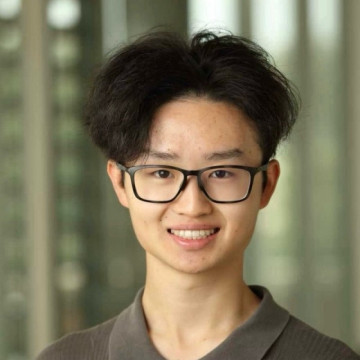
My mentor, Professor Li, is a very knowledgeable and cool person to work with. He knows, and has worked on, a lot of research projects and papers within the 3D spatial scenery reconstruction or generative model domain.
Professor Li provided a lot of guidance for me to navigate the space of researching multimodal generative models. He helped me to break down complex ideas into simple terms, provided guidance as to what kind of experiments I could work on, suggested novel models/papers I should read about in the industry, and provided potential ideas for the overall research direction. When I get lost in my experiments or just lost about the research direction overall, I can always turn to him for guidance.
We connect weekly in our lab meetings and that’s where I usually receive feedback about my current progress and receive direction and inspiration for future experiments that I can work on.
Discover the data science bachelor's degree at the University of Virginia. Request more information, connect with Admissions, or start your application today.
Subscribe to receive updates from the School of Data Science.