Image


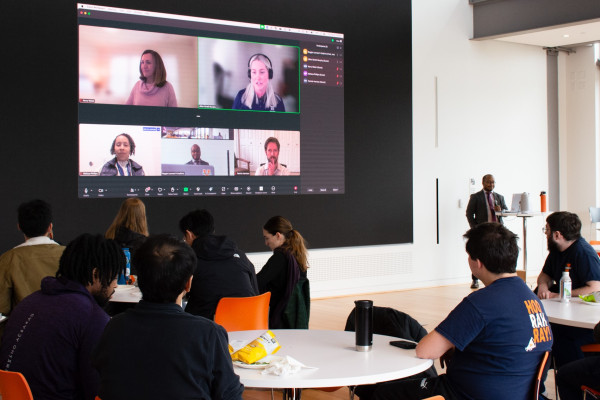
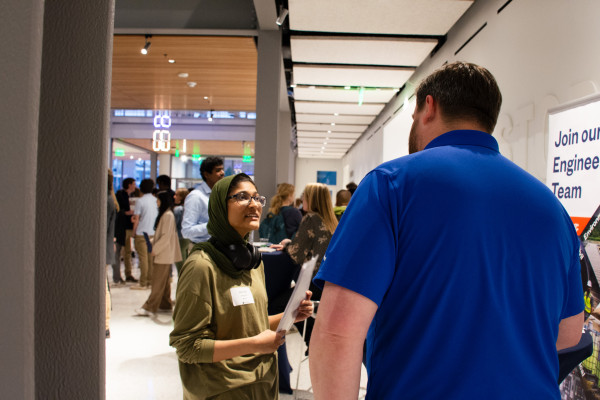
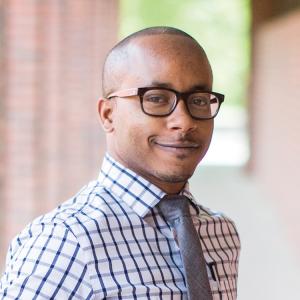
MSDS Residential students are preparing for life after the program, so to answer questions about career navigation, job applications, and resume building, Associate Director for Career Connections and Community Engagement Reggie Leonard and Director of Career & Professional Development Sarah Rogis hosted an Ask-Me-Anything event as part of the Modeling Your Future series.
The event featured Rogis and Leonard fielding comments, questions, and concerns from MSDS students in an interactive career conversation. While students came with burning questions, Rogis and Leonard began by highlighting a pertinent resource for students as they enter job application cycles: Beyond Grounds.
Beyond Grounds is a tool for collecting first destination information about internships and experiences that students have gained throughout their time at UVA. "The best part about Beyond Grounds is that students can use the platform to research UVA data and national data," Rogis said.
The platform includes the first destinations of students who have graduated since 2020, as well as access to an interview question repository. The goal is for students to use this information to better prepare for applications, explore career paths, or leverage historical data in salary negotiations. The program is currently only available for graduate students, with undergraduates to be included soon. Rogis and Leonard suggested the program as a useful tool for any graduating students.
Rogis and Leonard then covered the importance of understanding job opportunities, negotiating salaries, and navigating multiple job offers. One student asked how to tell the difference between starting an opportunity and securing it, wondering what to do when interviewing for multiple positions at once.
"I definitely always recommend fully sitting through a process until you have something in writing," Leonard said. "Even if it feels like you're going to get a verbal offer, see it through. Concurrently, I really still encourage applying to or seeing through other opportunities that you're interested in."
If the timeline is a constraint, Rogis said that if it is possible to share that you might be expecting to hear back from somewhere else by a certain date, that can expedite the process.
Students then inquired about the risks associated with turning down or reneging on offers. Rogis and Leonard said that the professional world is more interconnected than one might think, so reneging on offers has real potential to damage professional relationships and reputation. They mentioned that some organizations may be less likely to recruit from certain universities if they see a trend of students reneging on offers.
After more questions, Rogis established an appropriate time to negotiate salary as well as how networking can be crucial to its success. "We give three weeks," Rogis said. "That is a completely appropriate timeline." Rogis and Leonard connected networking to the success of the negotiation process, noting the value in a referral network of connections that can vouch for you and testify to your ability.
Perhaps just as crucial as having a connected network is having an ever-evolving technical skillset, Rogis and Leonard noted. They said that while the data science job market has high demand, the nature of the job requires skillsets to grow with the technology, changing at a rapid pace.
Recruiters today look for technical skills balanced with personal interests, data professionalism, and interest in growth. Leonard stated that people who end up staying the longest at organizations are the ones who are most aligned with the core product itself.

Rogis and Leonard shared their parting thoughts for MSDS students. "The series is named 'Modeling Your Future' for two reasons: it’s a riff on statistical modeling as a practice of creating a structured proxy for probable outcomes, as well as a riff on the psychological concept of learning by watching/observing others," Leonard said. "There’s an amazing community of graduates who have come before you, who once sat in your shoes, and are in the places you all hope to be. You’re on the path to becoming more of yourself, and we’re so excited to see where that leads you. And we’d love to have you back to share about it with future students. You are, in many ways, the future."
"You’ve got this!" Rogis assured the attendees. "Regardless of where you are in your career exploration or search journey — the experiences you’ve had, the skills you’ve cultivated, the community you have built will carry you far and serve you well as you navigate the world of work and what we are confident will be an exciting and diverse career journey that will be uniquely yours."
Subscribe to receive updates from the School of Data Science.