Image

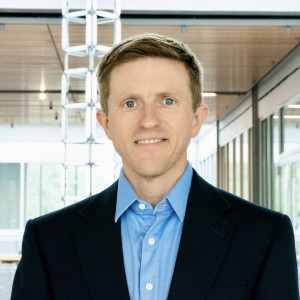
Stephen Turner, assistant dean for research and an associate professor at the University of Virginia School of Data Science, and colleagues received a $3.4 million grant from the William and Flora Hewlett Foundation on Sept. 12. The project is related to biosecurity and artificial intelligence and will result in practical guidance for AI developers and policymakers.
Biosecurity protects humans, habitats, and food supply from biological threats like pests, diseases, and toxins. With the growing sophistication of AI models, there is rising concern that they could be used to create dangerous pathogens or other threats. But having access to high-level information — even if it’s dangerous — does not necessarily mean a novice would be able to put it to use.
Turner said there isn’t much research on the discrepancy between how well a model performs (its benchmark scores) and how well it could teach someone to perform tasks.
“AI companies, governments, and funders make decisions about AI and biological risk based largely on benchmark scores,” said Turner. “But how well do those scores predict what a person can actually do with a model?”
With support from the Hewlett Foundation grant and in collaboration with Turner’s industry partner Signature Science and UVA’s National Security Data and Policy Institute, Turner and the research team are planning to find out.
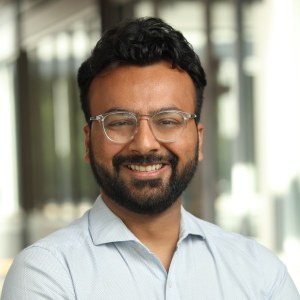
“My data science colleagues and co-investigators Tom Hartvigsen and Chirag Agarwal are two of the best people I know at editing and explaining what large AI models have learned. They will test whether we can remove risky knowledge from a model without breaking what makes it useful,” Turner said. “And our colleagues at UVA’s National Security Data and Policy Institute will help connect these results to policy decisions that are being hotly debated right now.”
The team plans to recruit roughly 150 upper-level undergraduates and first-year graduate students in fields such as biology and biomedical research. They will randomly assign them to write or troubleshoot lab protocols using either a frontier AI model or just a web search. Signature Science will then score each protocol and attempt to carry them out in a real bio laboratory, without knowing which group wrote it. Every experiment will use non-pathogenic organisms and standard laboratory cell lines.
The project reflects the School’s broader focus on advancing AI research that pairs technical innovation with real-world impact and responsible use.
“The School of Data Science congratulates Stephen, Tom, Chirag, and the entire team on this outstanding award,” said Jeffrey Blume, interim Stephenson dean. “We are incredibly proud of their work at the intersection of AI, biosecurity, and public policy, and of the collaboration across UVA that made it possible. This is exactly the kind of timely, high-impact research we want to help lead.”
Subscribe to receive updates from the School of Data Science.