Image

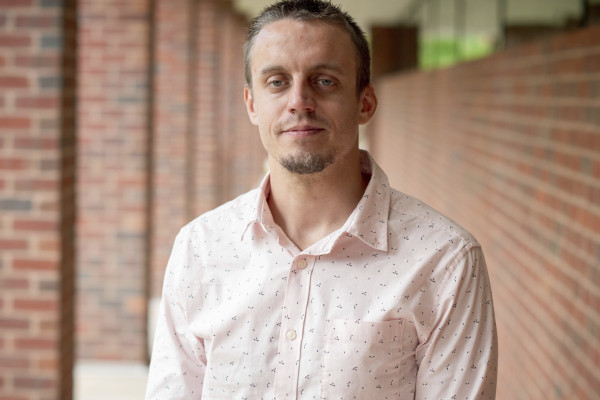
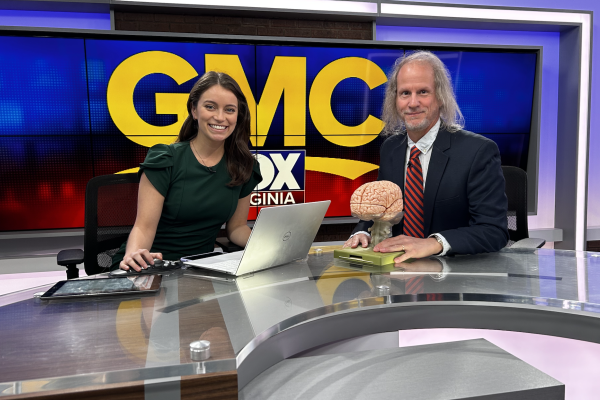
UVA Data Science and Psychology Professor John Van Horn was recently awarded a competitive High-End Instrumentation Grant from the National Institutes of Health to study brain datasets.
Van Horn used the funding to purchase 36 NVIDIA Grace Hopper Superchips, next-generation hardware that combines a CPU and GPU on one chip to dramatically speed up large-scale AI and high-performance computing tasks.
“Having this new state-of-the-art GPU cluster at our disposal to analyze these rich data sets will accelerate foundational brain science discoveries, based here at UVA, which can lead to cures for patients with Alzheimer’s or Parkinson’s disease and enable a better understanding of conditions like autism spectrum disorder,” said Van Horn. “Fundamentally, this resource will help us understand how brain form, function, and connectivity might be influenced through genetic and environmental contributions.”
NIH-funded investigators from across the University will be able to conduct neuroscience-related research using this computing resource, which Van Horn describes as one of the most powerful neuroscience-focused, university-based computing resources in the country.
The Grace Hopper GPUs have been configured, tested, added to the already existing NEO brain data analytics computer hardware platform, and are now available for use on brain and data science projects. To use the new technology, investigators need to have an active account on the UVA Ivy/Rio system, provide an application describing their proposed project, and get approved by an advisory committee before submitting jobs to the system. More information will be posted soon on the Research Computing website.
“Having a dedicated computing resource for the application of advanced computational analysis, machine/deep learning, and AI on those data is a vital necessity for our UVA brain research enterprise,” Van Horn said.
This exciting technology for brain data analytics will empower new partnerships with schools across the University, including Arts & Sciences, Medicine, Education and Human Development, and Engineering and Applied Science, embodying the School of Data Science’s commitment to interdisciplinary collaboration.
Subscribe to receive updates from the School of Data Science.