UVA Data Points Podcast: Digital Twins

In this episode of Data Points, we explore the rapidly evolving world of digital brain twins; personalized, data-driven models of the brain that could revolutionize medicine and neuroscience. Joining the conversation are two leading experts: Randy McIntosh, a pioneer in brain network analysis, and Emiliano Ricciardi, an expert in cognitive neuroscience and neuroimaging. Together, with Jack Van Horn, professor with the School of Data Science and Department of Psychology, they'll dive into how these digital replicas of the brain could change the way we understand cognition, disease, and treatment.
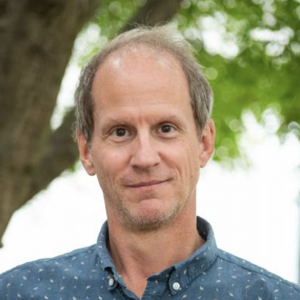
Randy McIntosh holds a Ph.D. in psychology and neuroscience, with a strong background in statistics and brain network modeling. His research began at the Rotman Research Institute at the University of Toronto, where he developed a deep interest in aging and cognition. Over the years, he's led international collaborations that resulted in the Virtual Brain (thevirtualbrain.org), a globally adopted platform for simulating large-scale brain dynamics using personalized data.
McIntosh joined Simon Fraser University in 2022, where he serves as director of the Institute for Neuroscience and Neurotechnology. His vision is to bridge neuroscience research with real-world impact by pursuing two key goals: (1) integrating personalized brain modeling into clinical decision-making, and (2) creating a cloud-based platform that makes these tools accessible for research, education, and clinical use. He's particularly focused on building interdisciplinary and community-engaged approaches to improve brain health across the lifespan.
Emiliano Ricciardi M.D., Ph.D. is full professor in neuropsychology and cognitive neuroscience at the IMT School for Advanced Studies Lucca in Italy, where he also serves as vice-rector for didactics. He studied medicine and surgery at the University of Pisa and received his Ph.D. in neurosciences from the Scuola Superiore Sant’Anna in Pisa, Italy. After extended research stays at the National Institutes of Health (NIH, USA), he developed expertise in in-vivo functional brain imaging (PET and fMRI) and the neural bases of sensory, cognitive and perceptual processes. Ricciardi’s research spans cognitive neuroscience and neuroimaging, with a particular focus on supramodal perception and the neural mechanisms underlying sensory deprivation and multimodal brain function. He has held leadership roles in major scientific meetings, serves on editorial boards of international journals, and is involved in interdisciplinary research bridging neuroscience, technology, and cognitive science.
John Darrell Van Horn holds dual appointments as professor with the School of Data Science and Department of Psychology. His extensive research interests include human neuroimaging, patterns, and biomarkers in brain health and disease; the brain as a data science; high-performance computation; multivariate statistical modeling; time series and spectral analysis; network and graph theory; image processing; programming in C, Matlab, Bash/csh; and methods of FAIR data sharing and open science.
His research has appeared in such publications as Science, Nature, Nature Neuroscience, the American Journal of Psychiatry, Biological Psychiatry, British Journal of Psychiatry, Frontiers In Neuroinformatics, Journal of the American Medical Informatics Association, Journal of Cognitive Neuroscience, Journal of Nuclear Medicine, Journal of Psychopharmacology, Magnetic Resonance in Medicine, and NeuroImage, among others. His work has been featured prominently in the media and popular press.